
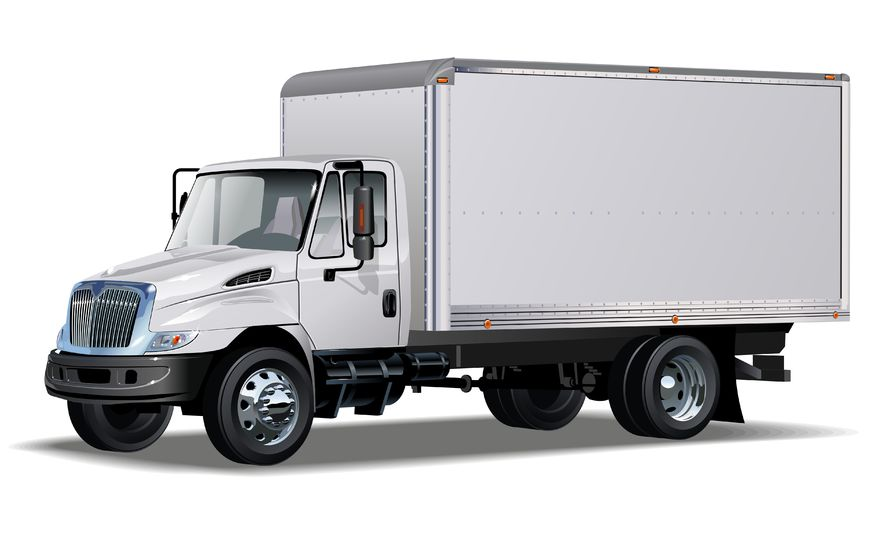
Box Truck Insurance in Indianapolis, Indiana: The Complete 2026 Guide for Owner-Operators & Fleets
If you drive a 16′, 20′, 24′, or 26′ box truck anywhere between Downtown Indianapolis and the Plainfield logistics corridor, you already know this city runs on straight trucks. Indianapolis sits at the crossroads of I-65, I-70, I-69, I-74, and I-465 — the “Crossroads of America” isn’t just a state motto, it’s the reason thousands of box trucks move freight, furniture, appliances, and last-mile packages through Marion County every single day. This makes box truck insurance very important for those drivers.
That same interstate access that makes Indianapolis such a good place to run a box truck business also makes it a demanding place to insure one. Between the FedEx Ground SuperHub near Indianapolis International Airport, the Amazon fulfillment network stretching from Plainfield to Whitestown, and the dense downtown delivery grid around Monument Circle and Fountain Square, box truck operators here face a unique mix of urban stop-and-go risk, highway exposure, and seasonal weather that most generic auto policies were never built to handle. Box truck insurance experts understand these factors well.
This guide breaks down exactly what box truck insurance in Indianapolis costs, what coverage you actually need, which Indiana-specific filings apply to you, and how local operators can lower their premiums without cutting corners on protection. Whether you’re an independent owner-operator hauling for a regional van line, a contracted driver running Amazon or FedEx routes, or a small fleet owner based out of Speedway, Beech Grove, or Lawrence, this is written for you.
Why Box Truck Insurance Is Different From Regular Commercial Auto
A lot of new operators assume a standard commercial auto policy covers everything a box truck needs. It usually doesn’t. Box trucks occupy a strange middle ground in the insurance world — heavier and higher-value than a cargo van, but often exempt from the same interstate authority requirements as an 18-wheeler. That gap creates real coverage confusion, and it’s where a lot of Indianapolis operators end up underinsured. We are experts at determining the best box truck insurance carriers.
Properly structured box truck insurance typically includes:
- Primary Auto Liability — covers bodily injury and property damage you cause to others
- Physical Damage Coverage (Comprehensive & Collision) — protects your truck itself from collisions, theft, vandalism, fire, and weather events
- Motor Truck Cargo Insurance — covers the freight you’re hauling if it’s damaged, stolen, or lost in an accident
- Non-Trucking Liability (Bobtail Coverage) — protects you when you’re leased to a carrier but driving for personal reasons or between dispatches
- General Liability — covers incidents that happen off the road, like at a loading dock or client’s property
- Hired & Non-Owned Auto Coverage — important if you rent trucks or use additional drivers occasionally
A single missing piece here — say, cargo coverage — can turn a fender-bender with a load of damaged appliances into a five-figure out-of-pocket loss. This is exactly why box truck insurance needs to be built around how you actually operate, not a one-size-fits-all commercial auto template.
Indianapolis-Specific Risk Factors That Affect Your Premium
Insurance carriers don’t price Indianapolis box truck insurance policies in a vacuum. They look at claims data, traffic density, weather patterns, and freight volume specific to Central Indiana. A few local realities that show up in nearly every underwriting conversation:
1. The I-465 Beltway and Interstate Convergence
Indianapolis is one of the few U.S. cities where four major interstates (I-65, I-70, I-69, I-74) physically converge around a full beltway (I-465). That means a box truck running local delivery routes still logs significant highway mileage merging on and off ramps at interchanges like the I-465/I-70 East Split and the I-65/I-70 North Split downtown — both of which rank among the most congested and accident-prone interchanges in the state. Higher interchange density generally means higher liability exposure, which carriers factor into rating.
2. Last-Mile and Warehouse Density in Hendricks and Boone Counties
The Plainfield, Avon, and Whitestown corridor along I-70 West has become one of the fastest-growing logistics hubs in the Midwest, anchored by Amazon, FedEx, and dozens of third-party warehousing operations. If you’re running routes in and out of this corridor, your exposure to loading dock incidents, cargo theft, and parking lot fender-benders is meaningfully higher than a truck that never leaves a quiet suburb — and a good agent will make sure your policy reflects that reality instead of pricing you like a rural single-route hauler.
3. Winter Weather and Black Ice
Central Indiana winters bring freezing rain, black ice, and lake-effect snow bands that move through faster than local forecasts sometimes catch. Box trucks — tall, high center of gravity, often less than fully loaded on return routes — are more prone to sliding and rollover incidents in these conditions than passenger vehicles. Comprehensive coverage that accounts for weather-related physical damage isn’t optional here; it’s practically a requirement for anyone running routes between November and March.
4. Urban Delivery Density Downtown and in Broad Ripple
Tight alleys, double-parked delivery zones, and pedestrian-heavy areas around Mass Ave, Broad Ripple Village, and the Wholesale District create a different kind of risk than highway hauling — low-speed contact claims, mirror strikes, and property damage to buildings or parked vehicles. These claims are common, cheap to file, and frequent enough that they materially affect your loss history and renewal pricing over time. This can become a big risk for underwriters who work on box truck insurance policies.
5. Construction and Infrastructure Projects
Indianapolis has run near-continuous interstate reconstruction in recent years, including major work along I-65/I-70 downtown and I-69 corridor projects. Active construction zones mean narrowed lanes, shifting traffic patterns, and higher rear-end collision risk for larger vehicles that need more stopping distance — another factor carriers weigh when pricing Marion County-based fleets. Box truck insurance is expensive in areas of high claims.
Who’s Actually Driving Box Trucks Around Indianapolis?
Not every box truck operation in Central Indiana looks the same, and your ideal box truck insurance policy structure depends heavily on which category you fall into:
Last-Mile Delivery Contractors. With Amazon’s Delivery Service Partner network and FedEx Ground contracted routes running heavily through the Plainfield and Whitestown hubs, a large share of Indianapolis-area box trucks are running high-frequency, low-mileage urban routes all day. These operators typically need lower physical damage deductibles (because low-speed contact claims are common) and should confirm whether their contracting company’s box truck insurance requirements exceed state minimums — most do.
Independent Owner-Operators Under Their Own Authority. If you’ve got your own DOT number and are booking loads through brokers or direct shipper relationships, you’re carrying the full weight of primary liability, cargo, and physical damage yourself. This group benefits most from a locally shopped policy, since your rates depend heavily on your specific lane history, radius of operation, and freight type — things a national call center rarely asks about in enough detail.
Leased Owner-Operators. Drivers leased to a motor carrier typically have primary liability covered under the carrier’s policy while under dispatch, but need their own non-trucking liability, and often their own physical damage and cargo coverage depending on the lease agreement. Reading your lease agreement’s insurance section carefully — and matching your personal policy to fill the gaps — is essential here.
Local Fleet Owners. Moving companies, appliance delivery services, furniture retailers, and regional distribution businesses based in Indianapolis, Fishers, Carmel, Greenwood, and Beech Grove often run small fleets of 2–10 box trucks. Fleet policies benefit from consolidated billing, fleet-wide safety programs, and volume-based discounts that individual owner-operator policies don’t have access to — but they also carry more complex liability exposure since one bad claim can affect renewal pricing across the entire fleet.
Moving & Storage Operators. Indianapolis’s steady population growth in suburbs like Fishers, Zionsville, and Westfield has kept local moving companies busy year-round. These operators face unique risk from in-home and in-transit property damage claims, which usually calls for higher cargo limits and sometimes a dedicated bailee coverage endorsement in addition to standard motor truck cargo insurance.
Knowing which category you fall into — and being honest with your agent about how your operation actually runs day to day — is the single biggest factor in getting a policy that holds up when you actually need to file a claim.
What Does Box Truck Insurance Cost in Indianapolis?
Every box truck insurance policy is priced individually based on driving history, cargo type, radius of operation, truck value, and coverage limits, but Indianapolis-area box truck operators typically see premiums shaped by these variables:
- Radius of operation — a truck running strictly within Marion County will usually price differently than one running regional routes out to Fort Wayne, Louisville, or Cincinnati
- Cargo type and value — hauling electronics or pharmaceuticals costs more to insure than hauling furniture or dry goods
- Truck age, value, and length — a newer 26′ box truck with a liftgate costs more to physically insure than an older 16′ truck
- Driving record and years of experience — clean MVRs and CDL history (where applicable) meaningfully lower rates
- Authority type — operating under your own DOT authority versus being leased to a motor carrier changes your liability structure and what coverage is legally required
- Liability limits selected — many freight brokers and shippers now require $1,000,000 in liability coverage as a condition of hauling for them, which is worth confirming before you shop coverage
Because so many of these variables shift week to week for owner-operators — new contracts, added drivers, seasonal routes — it’s worth getting a quote reviewed rather than assuming last year’s number still applies. Rates in the Indianapolis market have moved with national trucking insurance trends over the past two years, and operators who haven’t re-shopped their coverage recently are often paying for a rate environment that no longer reflects what’s available. We stay on top of the box truck insurance trends to provide top service.
Indiana DOT and Federal Filing Requirements for Box Truck Operators
Depending on your operation, box truck insurance in Indianapolis intersects with several state and federal compliance requirements:
- USDOT Number — required if you operate in interstate commerce or meet Indiana’s intrastate thresholds
- Indiana Motor Carrier Registration — required through the Indiana Department of Revenue’s Motor Carrier Services division for commercial vehicles operating within the state
- BOC-3 Filing — designates process agents in each state you operate in; required for interstate motor carriers
- MCS-90 Endorsement — a federally mandated endorsement ensuring minimum liability protection is available to the public, even if your policy has exclusions
- IFTA (International Fuel Tax Agreement) — applies if your box truck qualifies as a “qualified motor vehicle” and crosses state lines regularly
A lot of Indianapolis box truck operators — especially those newer to running under their own authority — get tripped up by assuming their weight class exempts them from DOT numbers or IFTA. Box trucks in the 10,001–26,000 lb GVWR range frequently do need federal registration if they’re crossing state lines, even without a CDL requirement. A local agent who works Indiana filings regularly can usually tell you in a five-minute call whether you’re compliant or exposed.
Common Box Truck Insurance Mistakes We See in the Indianapolis Market
Underinsuring Cargo Value
Operators frequently insure cargo at a flat, low limit because it lowers the quoted premium — then get stuck eating the difference when a claim comes in on a fully loaded truck. If you’re regularly hauling higher-value freight in and out of the Plainfield warehouse corridor, your cargo limit needs to reflect your actual average load value, not your cheapest possible load.
Skipping Non-Trucking Liability
If you’re leased to a motor carrier but occasionally drive the truck for personal errands, fuel runs, or maintenance trips between dispatches, your carrier’s policy typically won’t cover you during that time. Non-trucking liability closes that gap for a relatively small add-on cost, and it’s one of the most commonly skipped coverages we see among newer Indianapolis owner-operators.
Choosing Liability Limits Based on the Legal Minimum Instead of the Shipper Requirement
Indiana’s minimum liability requirements are a legal floor, not a business standard. Most freight brokers, 3PLs, and shippers operating out of the Indianapolis distribution hubs require $750,000 to $1,000,000 in liability coverage before they’ll dispatch a load to you — regardless of what state law technically requires. Insuring to the legal minimum instead of the contractual minimum is one of the fastest ways to lose access to good-paying freight. Box truck insurance limits will vary based on weight class.
Letting Coverage Lapse Between Contracts
Owner-operators between contracts sometimes let policies lapse to save a few weeks of premium. Even a short gap in coverage resets your continuous-coverage discount eligibility and can flag you as higher risk on your next application — often costing more in the long run than the temporary savings.
How to Lower Your Box Truck Insurance Premium in Indianapolis
- Bundle liability, cargo, and physical damage with one carrier rather than splitting coverage across multiple policies. Carriers frequently discount multi-line packages.
- Install a dash cam and telematics device. Several carriers writing Indiana trucking business offer measurable discounts for verified safe-driving data, and dash cam footage is one of the fastest ways to close out a liability dispute favorably after an accident on I-465 or downtown.
- Maintain a clean MVR. Even one at-fault accident or moving violation can shift your renewal pricing tier. If you’re managing a small fleet, driver screening matters as much as the policy itself.
- Right-size your cargo limit. Don’t over-insure cargo you rarely haul, and don’t under-insure your average load — both cost you money in different ways.
- Ask about seasonal or radius-based adjustments. If your routes genuinely shrink in radius during certain months, some carriers will adjust pricing rather than locking you into a flat annual rate built around your busiest season.
- Shop multiple carriers annually. Box truck insurance pricing has moved quickly over the past two renewal cycles. An agency with access to multiple carriers can compare your current policy against current market rates instead of just renewing on autopilot.
Why Work With a Local Indianapolis Agent Instead of a National Call Center
Box truck insurance sits at the intersection of state filings, federal motor carrier rules, and hyper-local risk factors — the kind of detail that’s hard to get right from a national 800-number that doesn’t know the difference between the Plainfield warehouse corridor and downtown delivery routes. A local Indianapolis agency that works exclusively in commercial trucking insurance can:
- Explain exactly which Indiana filings apply to your specific operation
- Match your cargo and liability limits to what Central Indiana brokers and shippers actually require
- Shop your policy across multiple carriers instead of pushing a single in-house product
- Issue same-day Certificates of Insurance when a shipper or broker needs proof of coverage before releasing a load
- Understand seasonal risk patterns specific to Marion County and the surrounding counties
That last point matters more than people expect. An agent who knows that black ice season starts earlier on the I-465 north side than it does downtown, or that cargo theft claims spike near certain warehouse clusters around the holidays, can help you structure a policy around real risk instead of generic assumptions. Local agents understand box truck insurance risk best.
What to Do After a Box Truck Accident in Indianapolis
Even with the right coverage in place, knowing how to respond in the moment protects your claim and your policy’s future pricing. If you’re involved in an accident anywhere in Marion County or the surrounding metro:
- Prioritize safety first. Move the truck out of active traffic lanes if it’s safe to do so, especially on high-speed sections of I-465 or I-70 where a stopped box truck creates a serious secondary-collision risk for other drivers.
- Call 911 and request an official police report, even for minor contact incidents. Indianapolis Metropolitan Police Department crash reports are often required by insurance carriers before a claim can be processed, and they carry significant weight in liability disputes.
- Document everything. Photograph vehicle positions, damage, road conditions, traffic signals, and any relevant signage before vehicles are moved, if it’s safe to do so. If you have a dash cam, secure that footage immediately. With box truck insurance policies its good to notate for damage to the door as well.
- Notify your agent or carrier the same day. Delayed reporting can complicate claims and, in some cases, give a carrier grounds to question coverage. Same-day reporting also gets your Certificate of Insurance and claims paperwork moving faster if a broker or shipper needs updated documentation to keep your loads on schedule.
- Avoid discussing fault at the scene. Exchange information and let the claims adjusters and police report establish liability — statements made in the moment can complicate an otherwise straightforward claim.
A responsive local agent can walk you through this process in real time by phone if you’re not sure what a carrier needs — which is one more reason Indianapolis-based trucking businesses tend to do better working with an agency that answers the phone locally rather than routing through a national claims queue.
Frequently Asked Questions: Box Truck Insurance in Indianapolis
Do I need commercial box truck insurance for a box truck in Indiana, or can I use personal auto coverage? Personal auto policies exclude commercial use almost universally. If you’re using the box truck to haul freight, make deliveries, or generate business income, you need a commercial policy — driving under a personal policy for business use can result in a denied claim exactly when you need coverage most. Box truck insurance typically doesn’t cover personal auto.
What’s the minimum liability coverage required for box truck insurance in Indiana? Indiana’s state minimums apply as a legal floor, but most brokers and shippers operating through Indianapolis distribution hubs require $750,000–$1,000,000 in liability coverage before dispatching loads, regardless of the legal minimum.
Does my box truck insurance cover the cargo I’m hauling? Only if you’ve added motor truck cargo coverage. Liability and physical damage coverage protect the truck and other people/property — they do not automatically cover the freight inside the truck unless cargo coverage is specifically included.
How fast can I get a Certificate of Insurance for a load out of the Plainfield or Whitestown warehouses? Most Indianapolis trucking insurance agencies can issue a same-day COI, and several offer instant COI access through an online portal so you’re not waiting on a callback before a shipper releases your load.
Is non-trucking liability the same as bobtail insurance? They’re closely related and often bundled together, but non-trucking liability covers you for personal, non-business use of the truck while leased to a carrier, while bobtail specifically refers to driving the tractor/truck without a trailer or load attached between dispatches.
Will my rates go up if I add a second driver to my box truck? Box truck insurance can be expensive already with just one driver. It depends on that driver’s experience and MVR, not just the fact that you’re adding them. A clean-record, experienced driver may add minimal cost, while a newer or higher-risk driver can shift your premium more significantly — worth discussing before you add anyone to your box truck insurance policy.
Get a Local Box Truck Insurance Quote in Indianapolis
Whether you’re running a single 16′ box truck out of Speedway or managing a small fleet delivering across Marion, Hendricks, and Hamilton counties, coverage built around how you actually operate in Central Indiana is worth more than the cheapest generic quote. Indianapolis Commercial Truck Insurance works exclusively with Indianapolis-area trucking operators, shopping multiple top-rated carriers to find coverage that matches your routes, your cargo, and your budget. Get your box truck insurance quote with us today.
