
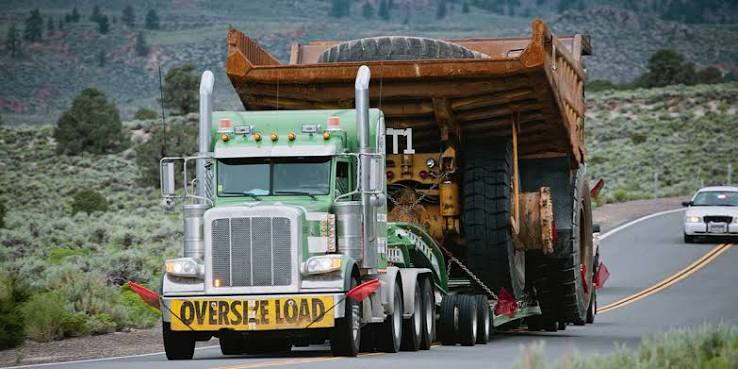
Oversized and Overweight Insurance in Indianapolis, IN: The Complete Guide for Indiana Haulers
If you’re running permitted loads through Marion County, hauling steel beams down I-70, or moving a wind turbine blade across I-465, you already know that standard commercial auto coverage doesn’t cut it. You need oversized and overweight insurance built specifically for the risks that come with hauling oversized loads through Central Indiana. At Indianapolis Commercial Truck Insurance, we help owner-operators, permit carriers, and fleet owners throughout Indianapolis, Marion County, and the surrounding counties find coverage that actually matches how they run.
This guide walks through everything an Indianapolis-based trucking company needs to know about oversized and overweight insurance — what it covers, why it costs what it costs, how Indiana’s permitting rules affect your policy, and how to shop for the right protection the smart way. Whether you’re a single owner-operator with one heavy-haul trailer or a growing fleet based out of the Indianapolis metro, this is the resource to bookmark.
What Is Oversized and Overweight Insurance?
Oversized and overweight insurance is a specialized form of commercial trucking coverage designed for loads that exceed standard legal size and weight limits set by the Indiana Department of Transportation (INDOT) and the Federal Highway Administration. When your cargo requires a permit because it’s too wide, too tall, too long, or too heavy for ordinary roadways, your everyday commercial auto policy usually isn’t enough. That’s where this specialized coverage comes in.
Unlike a standard trucking policy, it’s written to account for the added exposure that comes with permitted loads: escort vehicle coordination, route restrictions, higher cargo values, increased rollover risk, and the extra liability that comes from operating equipment that simply doesn’t behave like a normal tractor-trailer. Carriers that specialize in oversized and overweight insurance understand these variables and price policies accordingly, rather than trying to force a heavy-haul operation into a one-size-fits-all box.
For Indianapolis haulers, a well-built policy typically includes:
- Primary auto liability sized to match the higher risk of permitted, oversized freight
- Motor truck cargo coverage with limits that reflect the true value of heavy equipment, construction machinery, or manufactured components
- Physical damage coverage for the tractor, the specialized trailer (lowboy, RGN, extendable, multi-axle), and any auxiliary equipment
- General liability to cover third-party bodily injury or property damage during loading, unloading, or staging
- Pilot/escort vehicle liability, when applicable, for companies that run their own escort cars
- Permit and bond compliance support, since Indiana requires specific permits for oversized and overweight movements
If any one of these pieces is missing, your policy has a gap — and gaps in coverage are exactly where trucking companies get hurt financially after an accident.
Why Indianapolis Trucking Companies Need Oversized and Overweight Insurance
Indianapolis sits at the crossroads of five interstates — I-65, I-70, I-69, I-74, and I-465 — which makes it one of the busiest logistics hubs in the Midwest. That location is great for business, but it also means Central Indiana sees a huge volume of oversized and overweight freight moving through it every single day: wind energy components, precast concrete, agricultural equipment, modular buildings, industrial tanks, and construction machinery headed to job sites across Marion County and beyond.
Because so much permitted freight passes through the Indianapolis area, local carriers and underwriters have become increasingly sophisticated about pricing oversized and overweight insurance. That’s good news for you. It means Indianapolis-based trucking companies have access to markets that understand heavy-haul risk, rather than being forced into generic policies written by carriers unfamiliar with permitted loads.
Still, not every agency knows how to properly place this kind of coverage. Some agents will try to sell you a standard motor carrier policy and simply “add cargo” without ever accounting for the operational realities of oversized freight — the escort requirements, the route surveys, the curfews on certain Indianapolis roadways, the bridge weight restrictions along I-465, and the seasonal load restrictions INDOT issues each spring. When your policy is written by someone who doesn’t understand these details, you end up either overpaying for coverage you don’t need or underinsured for the risk you actually carry.
Working with a local Indianapolis agency that specializes in oversized and overweight insurance means your policy is built around how you actually operate — your routes through Marion County, your typical load types, your permit history, and your safety record — not a generic template.
Central Indiana’s industrial base only adds to this demand. The logistics parks around Plainfield and Whitestown, the manufacturing corridor stretching toward Anderson and Columbus, and the freight volume moving through the Indianapolis International Airport air cargo complex all generate a steady stream of permitted, oversized freight. Add in seasonal agricultural equipment moves, wind farm construction across rural Indiana counties, and highway and bridge projects along I-465 and I-70, and it’s easy to see why so many carriers, brokers, and shippers throughout the region depend on trucking companies that carry the right specialized coverage. A local agent who tracks these trends can help you anticipate where demand — and risk — is heading before it shows up on your renewal.
Indiana Permit Requirements and How They Affect Your Policy
Before we go further into coverage, it helps to understand how Indiana’s permitting system connects directly to oversized and overweight insurance. INDOT requires permits for any load that exceeds the state’s standard legal dimensions and weight limits. Depending on the size of your load, you may need:
- A single-trip permit for a one-time oversized or overweight movement
- An annual permit for recurring loads that regularly exceed standard limits
- A superload permit for extremely heavy or wide loads that require engineering review of bridges and route surveys
- Escort vehicle requirements, which kick in once a load exceeds certain width, length, or height thresholds on Indiana roads
Every one of these permit types affects your risk profile, and every one of them should be reflected in your coverage. Carriers who underwrite oversized and overweight insurance will often ask about your permit history, your typical load dimensions, and whether you run your own escort vehicles or contract them out. Answering these questions accurately isn’t just paperwork — it directly shapes your premium and your coverage limits.
One mistake we see often with new-to-heavy-haul operators in the Indianapolis area is failing to disclose the full scope of their permitted operations when applying for coverage. If a policy is written based on incomplete information about your loads or routes, a claim can be delayed, reduced, or denied. Being upfront with your agent about every aspect of your heavy-haul coverage protects you when it matters most — after an accident, not before one.
What Makes This Coverage More Expensive Than Standard Trucking Insurance
Trucking companies new to heavy-haul work are often surprised by the cost difference between a standard motor carrier policy and oversized and overweight insurance. There are real, defensible reasons behind that gap:
Higher cargo values. A flatbed hauling retail goods might carry a load worth a few thousand dollars. A lowboy hauling an excavator, a transformer, or a wind turbine nacelle through Indianapolis might be carrying freight worth hundreds of thousands of dollars, and pricing has to reflect that exposure.
Increased rollover and shifting risk. Oversized loads change the center of gravity of the entire rig. A load that’s too tall or too wide is inherently more prone to tip-over incidents, especially on ramps, curves, and the elevated interchanges common around downtown Indianapolis and the I-465 loop. Underwriters price oversized and overweight insurance with this added instability in mind.
Route and infrastructure risk. Bridges, overpasses, utility lines, and narrow rural roads outside Marion County all present unique hazards for oversized freight. A single miscalculated bridge clearance can result in catastrophic property damage claims, which is exactly the kind of exposure this coverage is designed to absorb.
Escort vehicle liability. When pilot cars or escort vehicles are involved, additional liability exposure comes into play — both for the escort vehicles themselves and for any incidents that occur because of miscommunication between the truck and its escorts. A comprehensive permitted-load policy accounts for this coordination risk.
Third-party property exposure. Oversized loads sometimes clip mailboxes, signs, guardrails, or overhead wires, even with the most careful drivers. These smaller, more frequent claims add up, and they’re baked into how carriers price coverage for permitted freight.
Understanding these cost drivers helps Indianapolis trucking companies have realistic conversations with their agent about what they actually need from their oversized and overweight insurance — and where there might be room to manage premium without cutting corners on protection.
Who Needs Oversized and Overweight Insurance in the Indianapolis Area?
This coverage isn’t just for massive superload carriers. In and around Indianapolis, we regularly write policies for:
- Heavy equipment haulers moving excavators, bulldozers, and cranes to construction sites across Marion County
- Wind energy transport companies running turbine blades and tower sections through Central Indiana on their way to wind farms across the Midwest
- Steel and manufacturing haulers delivering fabricated components to Indianapolis-area plants
- Modular and manufactured housing transporters moving prefabricated building sections along Indiana highways
- Agricultural equipment carriers hauling combines, grain bins, and irrigation equipment during planting and harvest season
- Precast concrete and utility structure haulers delivering bridge sections, septic tanks, and utility vaults to job sites
- Specialized rigging and machinery movers relocating industrial equipment for Indianapolis manufacturers
If your business touches any of these categories, oversized and overweight insurance isn’t optional — it’s the foundation that keeps your operation compliant with Indiana law and protected against the financial fallout of a serious accident.
How to Choose the Right Policy
Shopping for oversized and overweight insurance can feel overwhelming, especially if you’re used to buying standard commercial auto coverage. Here’s how we walk Indianapolis clients through the process.
1. Start With an Honest Operational Snapshot
Before comparing quotes, get clear on exactly what your coverage needs to include: typical load dimensions and weights, common routes through and around Indianapolis, whether you run interstate or stay within Indiana, how often you pull superloads versus routine oversized freight, and whether you own or contract your escort vehicles. The more accurate this picture is, the more accurate your quote for this coverage will be.
2. Match Cargo Limits to Real Load Values
Don’t guess at cargo limits. If you regularly haul freight worth $250,000 or more, your policy needs cargo limits that reflect that reality — not a generic $100,000 limit that leaves you dangerously underinsured on your highest-value runs.
3. Confirm Physical Damage Coverage Fits Your Specialized Trailers
Lowboys, RGNs, extendable trailers, and multi-axle specialized equipment cost significantly more to replace than a standard dry van trailer. Make sure your oversized and overweight insurance values these trailers correctly, including any custom modifications.
4. Ask About Permit and Compliance Support
A good provider should understand Indiana’s permitting process well enough to help you avoid coverage gaps tied to permit violations. If a claim arises and your permit wasn’t properly filed, it can complicate how your policy responds.
5. Review Escort Vehicle Coverage Carefully
If your operation runs escort or pilot vehicles, confirm exactly how your oversized and overweight insurance treats those vehicles — as covered autos, as contracted third parties, or as excluded entirely. This is one of the most commonly overlooked gaps in policies written by agents unfamiliar with heavy-haul trucking.
6. Compare More Than Just Premium
The cheapest quote is rarely the best value. A policy with tighter cargo limits, higher deductibles, or excluded route types might look attractive on price but leave you exposed exactly when you need protection most. Work with an agent who explains the tradeoffs clearly rather than just chasing the lowest number.
Simple Steps That Help Keep Your Premiums in Check
Even with specialized coverage, there are practical ways Indianapolis operators can manage what they pay for oversized and overweight insurance without cutting protection. Maintaining a clean safety record matters more here than with standard freight, since claims frequency directly influences renewal pricing on permitted-load risk. Investing in driver training specific to wide-load maneuvering, bridge clearance awareness, and INDOT route compliance also signals lower risk to underwriters.
Route planning software that flags low bridges, weight-restricted roads, and seasonal Indiana load limits before a trip begins can prevent the exact claims that drive up premiums. Keeping detailed permit records and documenting escort coordination for every oversized run gives your agent stronger data to negotiate with carriers at renewal time. None of these steps replace the coverage itself, but they do help control the long-term cost of insuring permitted freight moving through Marion County and the wider Indianapolis region.
Common Claims Scenarios Covered by Oversized and Overweight Insurance
Understanding real-world claims scenarios helps illustrate why this coverage matters so much for Indianapolis-area haulers.
Bridge strike or clearance miscalculation. A load slightly taller than expected clips an overpass along an Indianapolis interstate, causing structural damage to both the load and the bridge infrastructure. A properly structured policy responds to both the property damage claim and any resulting liability.
Load shift on a highway ramp. A heavy piece of equipment shifts during a turn onto a ramp near the I-465 interchange, damaging the trailer and surrounding property. Oversized and overweight insurance with adequate physical damage and liability limits absorbs this kind of loss.
Escort vehicle incident. A pilot car assisting an oversized load is involved in a collision while blocking traffic for a lane change. If your policy properly accounts for escort vehicle liability, you’re protected from the resulting claim.
Weather-related rollover. High winds catch a wide load crossing an elevated section of highway near Indianapolis, causing a rollover. This is precisely the kind of catastrophic, high-cost claim that a specialized permitted-load policy is built to handle — one that a standard trucking policy might not adequately cover.
Each of these scenarios reinforces the same point: generic trucking coverage wasn’t built for this kind of risk. Specialized permitted-load protection was.
Working With a Local Indianapolis Agency for This Coverage
There’s real value in working with an agency that’s physically based in Indianapolis and understands Central Indiana’s roads, permitting quirks, and seasonal restrictions when placing oversized and overweight insurance. At Indianapolis Commercial Truck Insurance, we work with multiple carriers who specialize in heavy-haul and permitted-load risk, which means we can shop the market on your behalf rather than pushing you toward a single company’s product.
We also understand that trucking businesses in Marion County and the surrounding region don’t run identical operations. A flatbed operator hauling occasional oversized steel is a very different risk than a full-time superload carrier running wind energy components across state lines. Your policy should be built around your specific business — not a generic template pulled off a rate sheet.
Because we’re on call and can issue Certificates of Insurance quickly, Indianapolis trucking companies working with us don’t lose time waiting on paperwork to get a permitted load moving. When a job site or a shipper needs proof of coverage on short notice, we make sure you have it.
Frequently Asked Questions About Oversized and Overweight Insurance
Does my regular commercial truck insurance cover oversized loads? Usually not fully. Standard commercial trucking policies are priced and structured around typical legal-limit freight. Oversized and overweight insurance is written specifically to account for the added risks of permitted, oversized, or overweight cargo, and relying on a standard policy alone can leave serious gaps.
How much does this coverage cost in Indianapolis? Pricing varies based on cargo values, route types, equipment, driver experience, and claims history. Because it’s individually underwritten, the best way to get an accurate number is a direct quote based on your actual operation.
Do I need separate coverage for escort vehicles? It depends on how your operation runs escorts. Some policies can be structured to include owned escort vehicles, while contracted escort services may need their own coverage. Your agent should walk through this with you specifically.
Is oversized and overweight insurance required by Indiana law? Indiana requires appropriate insurance for any commercial vehicle on the road, and permitted oversized or overweight loads carry additional exposure that most responsible carriers and shippers expect to see reflected in adequate coverage. Beyond the legal minimum, this kind of protection is simply smart risk management for anyone hauling permitted freight.
Can I get coverage if I’m new to heavy-haul trucking? Yes. New operators can absolutely get oversized and overweight insurance, though underwriters will look closely at experience, equipment, and planned routes. Working with an agent who can present your operation clearly to the right carriers makes a real difference for new heavy-haul businesses.
Get an Oversized and Overweight Insurance Quote in Indianapolis Today
If you’re hauling permitted freight through Indianapolis, Marion County, or anywhere across Central Indiana, don’t leave your business exposed with coverage that wasn’t built for the risk you’re actually carrying. Oversized and overweight insurance protects your trucks, your trailers, your cargo, and your livelihood against the specific hazards that come with heavy-haul work.
Indianapolis Commercial Truck Insurance has helped owner-operators and fleets throughout Indiana find coverage that fits their real operation — not a generic policy pulled off the shelf. We shop multiple carriers, understand Indiana’s permitting requirements, and can get you a Certificate of Insurance fast when a job depends on it.
Call us today at (317) 365-1439 or request a quote online to get started on oversized and overweight insurance built for the way you actually run. Our team is located at 251 N Illinois St Suite 1920, Indianapolis, IN 46204, and we’re ready to help you stay compliant, protected, and moving — whether you’re pulling a single permitted load through Marion County this week or running a full heavy-haul fleet across Indiana year-round.
Get a quote today! Contact us here!

Leave a Reply